

With Potenza, Design Matters More Than the Tip
Why the same device produces different results
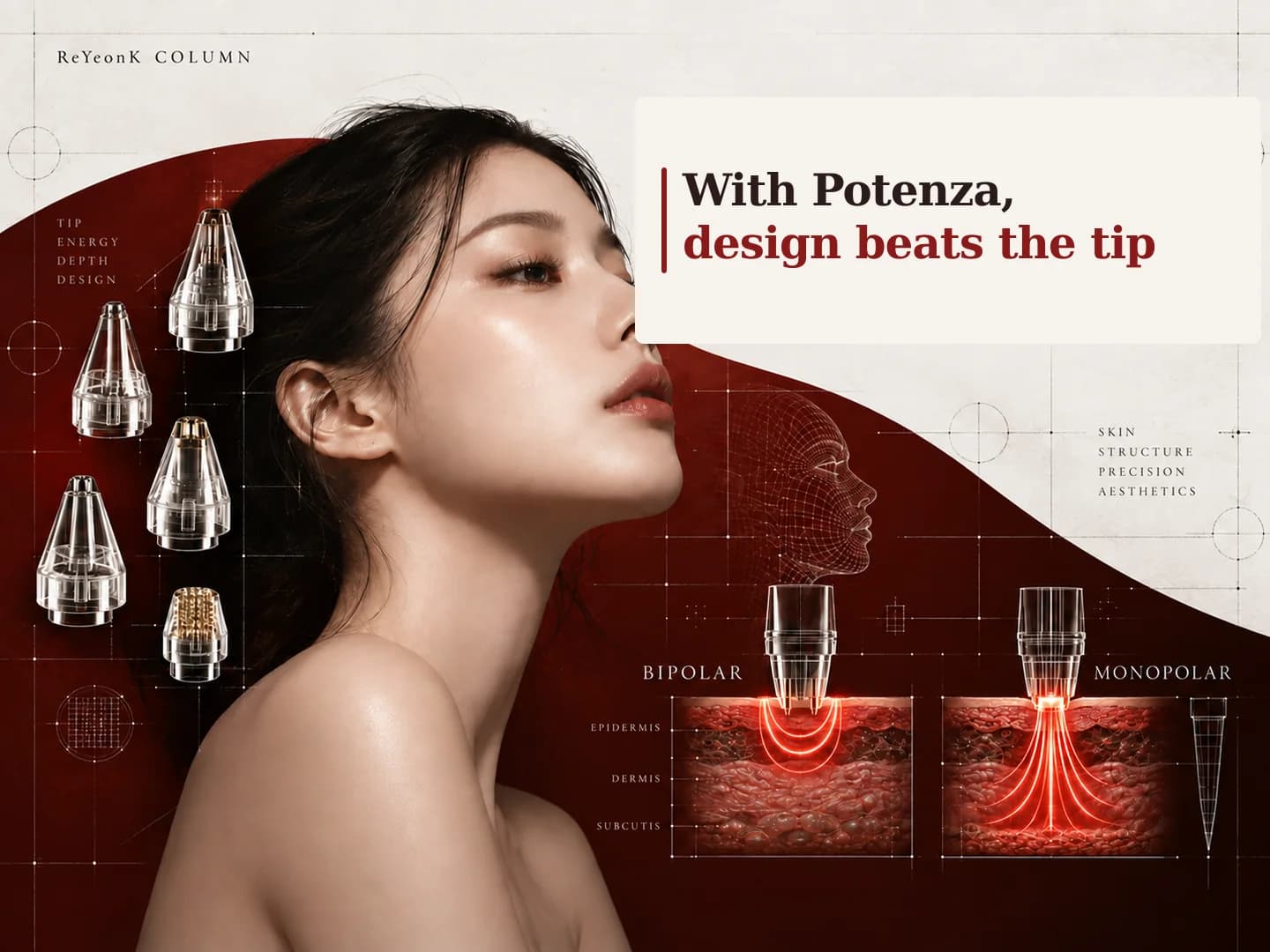
Potenza is a microneedle radiofrequency platform that can combine multiple modes and tips. The more options there are, the more important "why it was designed that way" becomes over "what was used."
Potenza is not a single treatment name
Potenza (POTENZA) is a microneedle radiofrequency device, but it offers many design options. Bipolar and monopolar can be selected, and the depth at which the energy acts can be adjusted. The purpose and reaction of the treatment can also change depending on which tip is used, such as the N tip, I tip, or pumping tip.
That is why I do not like explanations of Potenza that emphasize only the tip name. Even with the same tip, the actual treatment differs depending on how needle depth, insulation, mode, and number of passes are combined. Why it was designed that way should be explained before what was used.
Deeper is not better
Shallow skin texture and enlarged pores, deeply tethered scars, and loss of elasticity in the cheeks have different targets. Skin thickness and the anatomy of each area must also be considered. Energy that is deeper or stronger than the required layer can increase the recovery burden, while energy that is too weak may not produce the intended reaction.
Even within one face, the forehead, the area around the nose, the cheeks, and the jawline differ in skin thickness and concern. Customized treatment does not mean simply changing the numbers on the device screen. It means re-deciding the tip, mode, depth, and energy for each area.
Listen carefully when "drug delivery" is mentioned
Some tips are introduced as helping a preparation applied to the skin surface distribute through microchannels during treatment. But the approval scope, safety, and degree of delivery of the preparation used must be confirmed separately. An explanation along the lines of "it puts anything deep into the skin" is not accurate.
There needs to be a process of confirming and consenting to the name and purpose of the preparation, its approval status, and the expected reaction. An explanation that does not mix the device's function and the drug's effect into one sentence is the starting point of a safe consultation.
What determines results is diagnosis and records
Before treatment, we check inflammation, the skin barrier, tendency toward pigmentation, and the shape and depth of scars. After treatment, redness, swelling, dryness, and scabs may occur, so recovery time must be considered. Rather than trying to solve every concern at once, narrowing this session's goals to one or two makes evaluation more accurate.
ReYeonK records the initial photos and skin condition, the settings used, and the course, connected together, rather than following tip trends. That is what lets us decide with evidence whether to repeat the next treatment, adjust the intensity, or switch to another treatment.
Questions to think about before your consultation
What is the number one goal of this Potenza session?
Which tip, depth, and mode are chosen, and why?
If a preparation is used together, what are its name, purpose, and approval scope?
Treatment information
Potenza's treatment structure and process are summarized on the page below. Prices can be checked in the current event listing.
Medical references
Jeisys Medical, POTENZA system information (jeisys.com)
Preparations used and indications require confirmation of Korean approval status and the physician's judgment
This column is for general information. Individual indications, results, recovery, and risks depend on your condition and treatment settings, and should be decided after a medical consultation.
Treatments in this article
More from the Doctor's Column