

Wait — I Have Rosacea?
Facial redness, part 1 — how it hides, and how treatment thinking has changed
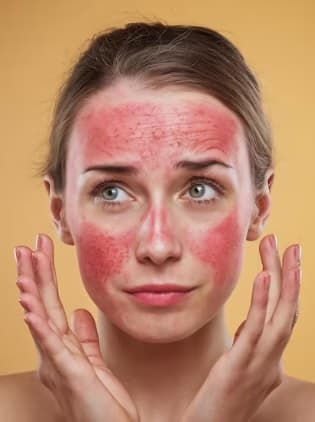
There is a Latin word for rose: rosa. From it comes rosaceus — "rose-coloured". And from that comes rosacea, the medical term for facial redness. Looking at the flush spreading across a cheek, people once thought of a rose.
A pretty name. Rather less romantic for those who meet that redness in the mirror every morning.
Redness is common enough that you see it everywhere, yet very few people come to a clinic because of the redness itself. Far more often, someone comes in for a different skin concern and we find the redness during the consultation.
The moment redness turns up in the consultation room
Not long ago a patient came in wanting her pores reduced. On examination, though, what needed attention first was facial redness with inflammatory papules across the skin. Rather than an aggressive, invasive approach to the pores, I recommended treating the inflammation and starting vascular laser first. Changing the order let us address the redness and the pores together.
Another day a patient came in troubled that her face had grown noticeably darker. Asking about her history, she had used steroid ointment continuously through middle and high school for severe acne. Marked redness had settled in underneath, and skin made sensitive to UV was overproducing melanin, so the tone had darkened. I planned toning alongside vascular laser treatment.
In both cases, what the patient came in for and what actually needed treating first were different things. Redness often hides behind another symptom like this.
How thinking about rosacea has changed
Rosacea used to be sorted into subtypes — facial flushing, vascular dilation, papules and pustules, tissue change — and treated accordingly.
The 2017 revised guidance from the National Rosacea Society (NRS) reframed it as a single continuous process. So today we assess by the phenotype a patient actually presents with — the signs and symptoms in front of us — and choose treatment to fit that particular state.
Which is why facial redness is not treated with one fixed method. It is combination therapy, matched to the individual: lifestyle modification, medication and laser treatment used together in the proportions that suit them.
Next in this series
Beyond the general lifestyle advice you find everywhere online, I will go through the practical daily guidance I actually emphasise to patients in the clinic. I will also walk through how ReYeonK's vascular laser programme for facial redness is structured.
The cause of redness, the treatment direction, the number of sessions needed and the course of recovery differ with skin condition and vary from person to person. Please decide on diagnosis and treatment plan only after consulting a physician directly.
Treatments in this article
More from the Doctor's Column