

In the Age of AI, a Clinic Must Be More Human
What to protect as technology speeds up medical care
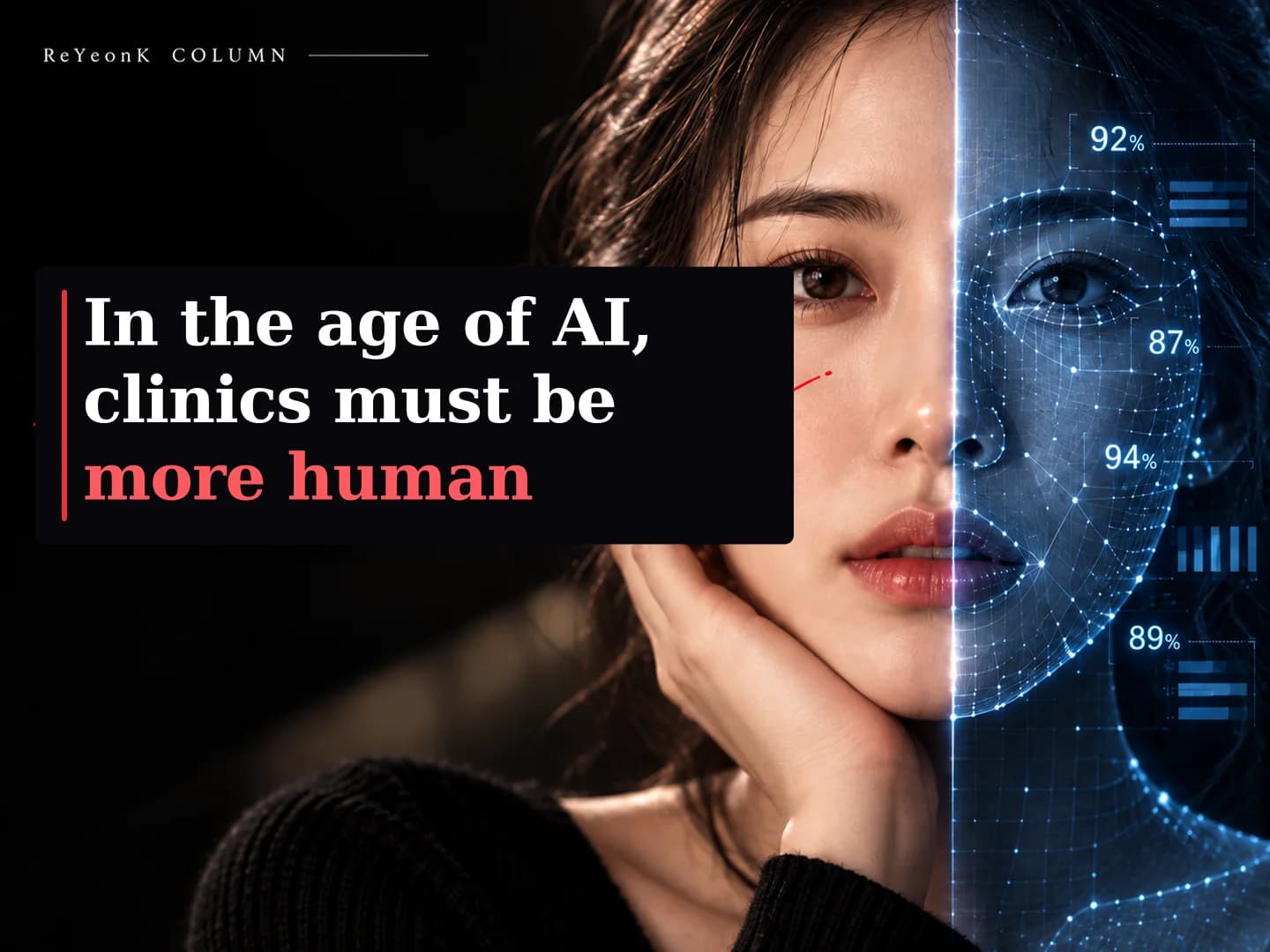
AI can make a clinic's records and explanations faster. But judging what a patient's face and life need, and taking responsibility for the result, remains an even clearer human role.
What AI will change first is the time outside the consultation room
A clinic has many repetitive tasks: document writing, appointment confirmation, sorting follow-up questions, organizing educational material. AI can help handle these quickly and consistently. If it reduces the time medical staff spend on screens and paperwork so they can attend longer to the patient's words and expressions, technology raises the quality of care.
Conversely, if AI is used only to cut consultation staff or to automate recommending more treatments, patients experience a clinic that is faster but colder. The purpose of efficiency should not be to erase people but to give time back to the conversations that matter.
Giving information and making decisions are different things
We use facial diagnostic equipment too. Confirming skin condition and before-and-after changes through objective data is clearly necessary. But an objective diagnosis may not match what the client actually worries about. The area the machine flags as the biggest problem and the part that person notices every day in the mirror can be different.
Their real needs come out through consultation. We have to listen fully to when they feel uncomfortable, what impression they want, and what they want to change and what they want to keep. I believe diagnostic equipment and AI should not be tools that decide the answer in our place, but reference material for consulting better. The final judgment and responsibility ultimately rest with the medical team.
Before personalization comes privacy protection
Medical records and facial photos are sensitive information. They should not be entered into public AI services merely for convenience, or kept for long periods with an unclear purpose. The purpose of collection, the retention period, access rights, and whether data is provided externally should be defined, and only the necessary information used.
Patients should be able to understand where their information is used and choose accordingly. Before introducing a new AI tool, security and contract terms, whether data is used for training, and the response procedure in case of errors should be reviewed first.
Future competitiveness is the ability to remember and connect
I believe that in the age of AI, taking more time in consultation and building a relationship with the patient becomes even more important. Only by connecting and remembering the concerns of the first consultation, the features they want to keep, the reasons and settings of each treatment, and the course afterward does a story form between that person and the clinic.
People often say narrative matters, storytelling matters. The narrative I have in mind is not a promotional phrase a clinic invents. It is the story a patient and a doctor actually build together through consultation, treatment, and follow-up. AI can help record that process more accurately and miss less, but it cannot replace the relationship itself.
Giving the time technology frees up back to people
What a clinic needs to prepare for the future is not one giant AI system. It can begin with small rules: structured intake, standardized explanations, follow-up records, privacy principles, and final confirmation by the medical team. Automated results should be checked regularly for errors and bias.
In the end, technology analyzes the face, and the doctor must interpret the person's heart. As AI advances, the difference between clinics will show not in a more precise machine but in consultations that ask more deeply and listen properly.
Questions to think about before your consultation
For what purpose, and where, are my information and photos stored?
How are the steps divided between what AI proposes and what the medical team confirms?
Has AI actually made conversations with patients and aftercare better?
Medical references
WHO, Ethics and governance of artificial intelligence for health (who.int)
Personal Information Protection Commission of Korea, guidance on AI and privacy (pipc.go.kr / privacy.go.kr)
This column is for general information. Individual indications, results, recovery, and risks depend on your condition and treatment settings, and should be decided after a medical consultation.
More from the Doctor's Column